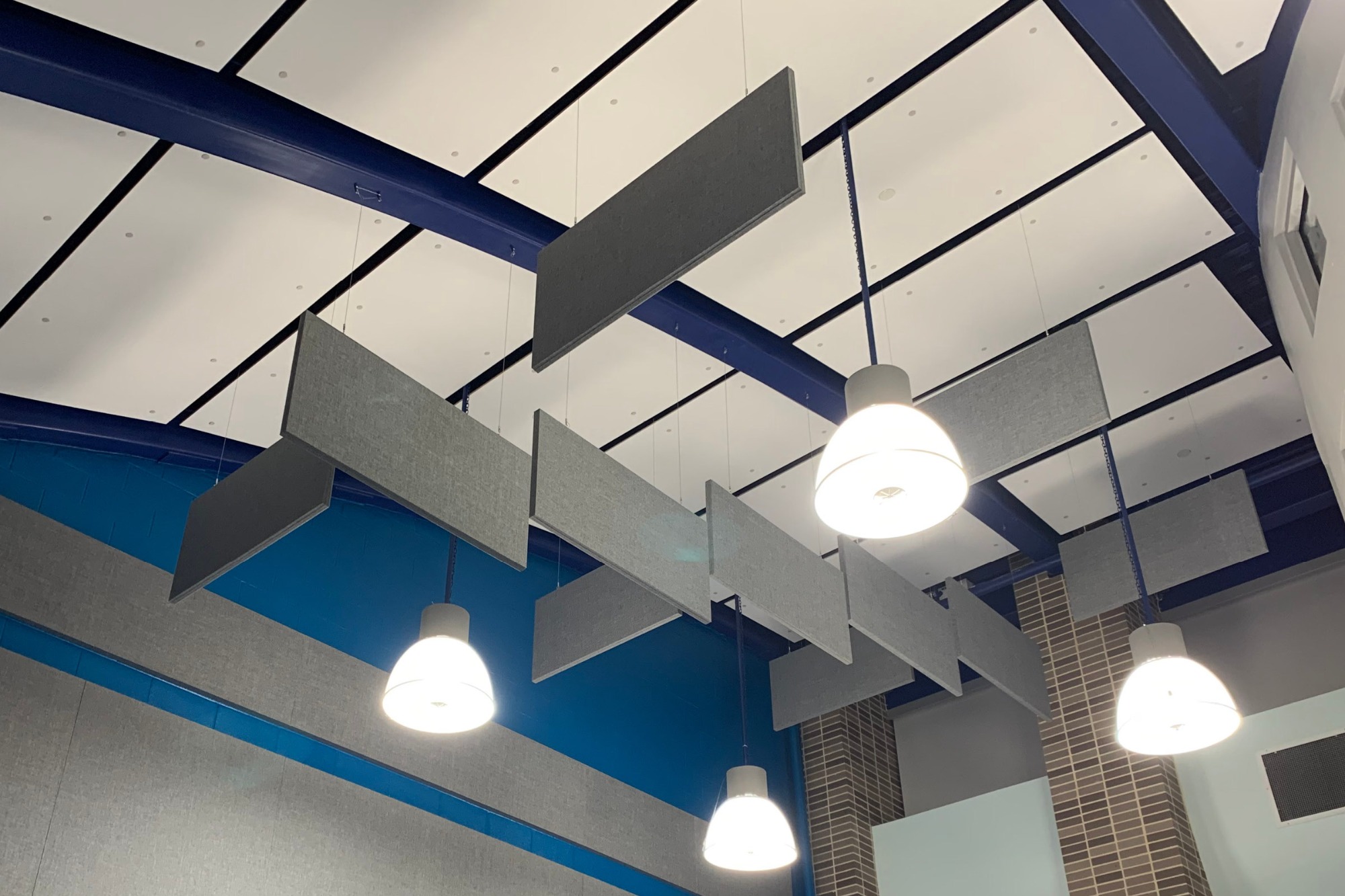
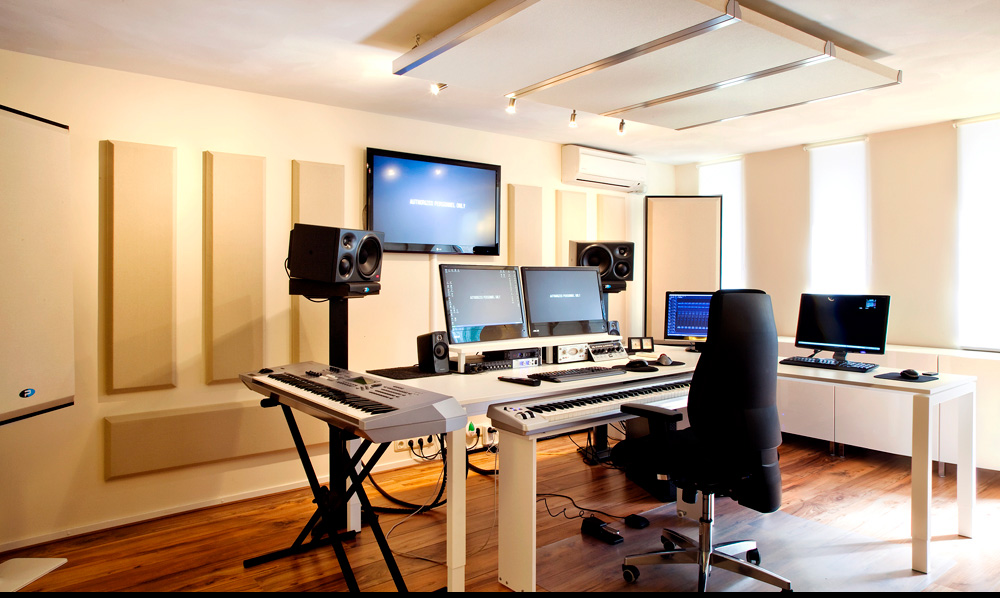
Unlike building acoustics, room acoustics deal with noise and sounds within a room or any given space. Instead of insulation, the main focus of room acoustics is absorption to prevent sound waves from bouncing back and forth within the room.
Listed below are some examples of common complaints related to room acoustics that you may be experiencing:
- Noise from talkative colleagues
- Disruptions caused by air conditioning and heating
- Difficulty concentrating due to distractions, such as conversations in communal spaces
- Visual distractions, such as sitting next to a busy entrance or reception area
- Need for privacy when sensitive conversations can be overheard
If you recognize any of these issues, you are likely facing poor room acoustics. However, there are a variety of solutions available to address these issues, and the appropriate solution will depend on the specific acoustic problem you are dealing with. To learn more about how to remedy your acoustic issues, get in touch with one of our acoustic consultants.
The workplace has become an extension of our daily lives, with individuals dedicating an average of 8 to 10 hours daily to their professional environment—surpassing the time spent at home. This reality underscores the importance of creating a workplace that replicates the comfort and personalization of home, empowering employees with choices regarding:
- The degree of privacy they seek.
- Their desired level of engagement and concentration.
Despite the collaborative spirit fostered by modern open-plan office designs, they present unique acoustic hurdles. Sound significantly influences our mood, health, and efficiency, necessitating the integration of thoughtful acoustic solutions from the outset of the design process, ensuring close collaboration across all teams. If this isn't the case, there is still an opportunity to enhance acoustics significantly with the right interventions.
This guide provides a step-by-step approach to addressing acoustic issues in your current office space.
Step 1: Identify the Source of the Acoustic Issue
Step 2: Determine the Type of Acoustic Problem
Step 3: Select a Solution for the Specific Room
There is no universal solution to acoustic problems, which is why this guide aims to assist you in selecting the most appropriate solution(s) for your situation.
Step 1: Identify the Source of the Acoustic Issue
— Building Acoustics Concerns
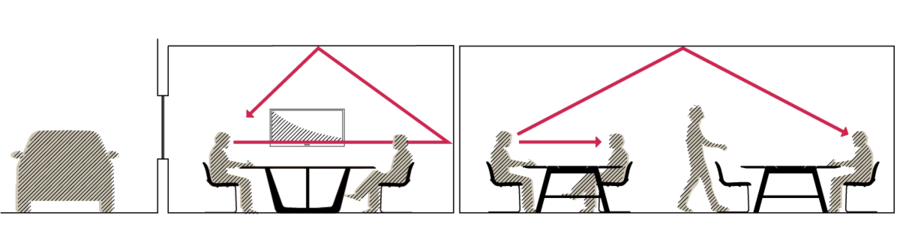
Building acoustics involves sound transmission between outdoor and indoor environments, as well as between structural elements of a building such as floors and walls. Common scenarios include:
- Sound transfer from outside sources, like traffic.
- Noise transmission between floors, such as footsteps.
- Sound leakage between adjacent rooms, like meeting areas.
Architectural solutions may involve insulating windows, walls, ceilings, and floors. Alternatively, sound transmission can be managed to prevent noise from escaping the room.
Room acoustics, in contrast, focus on internal noise and sound absorption to prevent sound waves from reverberating within the room. Common complaints related to room acoustics include:
- Disruptive noise from colleagues.
- Distractions caused by HVAC systems.
- Difficulty concentrating due to nearby conversations.
- Visual distractions from high-traffic areas.
- Privacy concerns during sensitive discussions.
If you encounter any of these issues, you likely face poor room acoustics. A variety of solutions are available, and the appropriate solution will depend on the specific acoustic problem you are dealing with. For personalized advice, consult with one of our acoustic experts.
Step 2: Specify the Type of Acoustic Issue
Room acoustics problems can be broadly categorized into:
- Reverb and echo
- Background noise
- Privacy issues
Reverb and Echo: Reverberation is the prolongation of sound after the initial noise has ceased, while an echo is a distinct repetition of the sound. In most workspaces, reverberation is the primary concern.
Background Noise: This includes noise pollution from conversations, ringing phones, and operational machinery, which can lead to concentration difficulties and decreased productivity.
Privacy Issues: These encompass both acoustic privacy, where speech privacy is compromised, and visual privacy, where distractions are visually intrusive.
Step 3: Select a Solution Based on the Room Type
The choice of solution depends on the space's purpose, such as a cafeteria, meeting room, lobby, library, open office, auditorium, private office, or restaurant. The recommended reverb time varies based on room size, intended activities, and occupancy levels.
For open offices, consider adding desk partitions and privacy booths for acoustic and visual privacy. In libraries, create zones with room dividers or acoustic islands. The solutions should align with the activities—focus, meeting, or socializing.
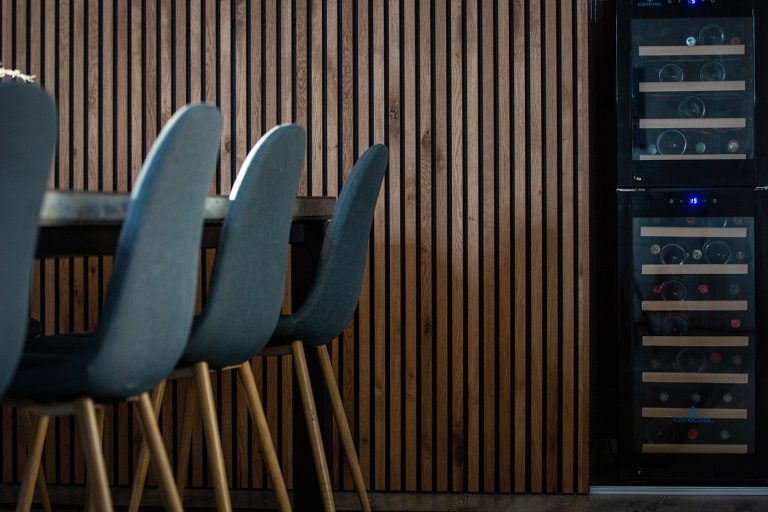
The construction of your space will inform the necessary solutions, such as the use of soft or hard surfaces. If your room includes porous, soft materials like carpets and plants, these can help absorb sound waves. However, if your space has hard surfaces like concrete, glass, and metal, it is crucial to incorporate more soft, absorbing materials.
In spaces filled with furniture, the area between the floor and ceiling is often underutilized. Here, adding acoustic ceiling applications can significantly improve acoustics. In more spacious, unfurnished environments, solutions can be tailored to the intended activities.
When considering audio solutions for your office or home, explore our range of mini line array speakers and compact audio systems that are perfectly suited for small to medium-sized rooms. Whether you need a compact home stereo system for personal use or a mini sound system setup for a professional environment, we offer a variety of options. For those with space constraints, our small home stereo system and mini pa speaker are ideal choices. And for larger areas, our compact line array and mini line array system ensure clear and powerful sound distribution. Small line array speakers and compact pa speakers are also excellent for enhancing the audio quality in your workspace or home.
Remember, the suggestions here are a starting point. For specific measurements and product quantities, contact our acoustic help desk. Use this guide to prepare for the questions that will arise during an acoustic assessment.